Result description
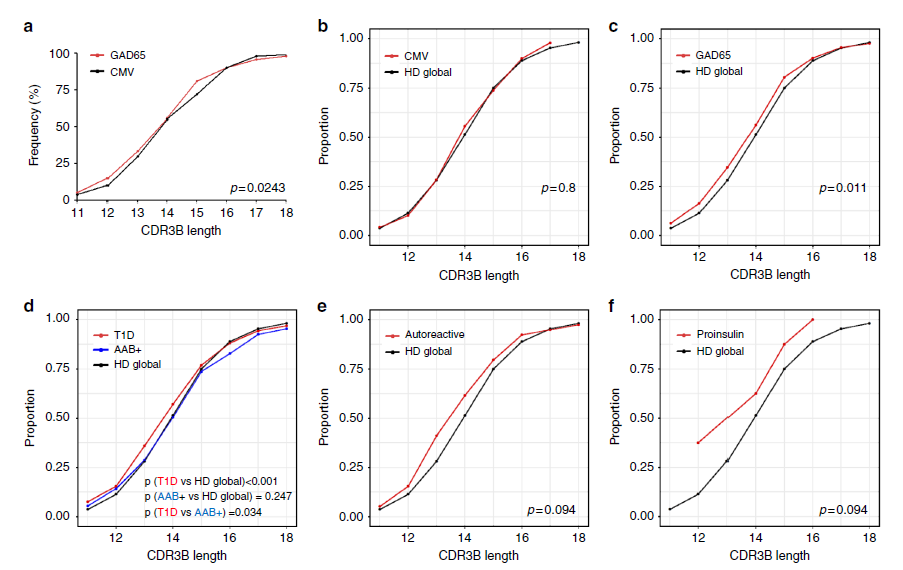
In this publication in Nature Communications we show, by analyzing sequences of circulating naive, central memory, regulatory and stem cell-like memory CD4+ T cell subsets from patients with type 1 diabetes (T1D) and healthy donors (HD), that patients have shorter TCRB CDR3s, introduced by increased deletions/reduced insertions during VDJ rearrangement. High frequency of short CDR3s arise independently of thymic selection. TCRB CDR3 clonotypes expressed by autoantigen-specific CD4+ T cells are also shorter compared with anti-viral T cells, and with HD. Thus, early events in thymic repertoire generation are abnormal in T1D, which suggest that short CDR3s increase the potential for self-recognition, conferring heightened risk of autoimmune disease. Our dataset is of value for any TCR profiling project, as we sequenced a big cohort of healthy donors, which would serve as a control population for many studies. Equally, we sequenced 4 different immune cell populations for each subject, providing a strong view on how a healthy TCR repertoire looks like. Against this backdrop, in the current pandemic our dataset can serve as a strong control to compare SARS-CoV-2-specific TCR sequences
Addressing target audiences and expressing needs
- We are sharing our knowledge
- Grants and Subsidies
- Other blended financing
- Collaboration
- Fellowship to advance my/our research
We are looking for sharing our healthy donor database and experience and expertise in TCR sequencing analysis, as well as creating collaborations and looking for new opportunities
- Others/ No specific audience
- Public or private funding institutions
- Other Actors who can help us fulfil our market potential
- Research and Technology Organisations
- Academia/ Universities
- Private Investors
Result submitted to Horizon Results Platform by KING’S COLLEGE LONDON