
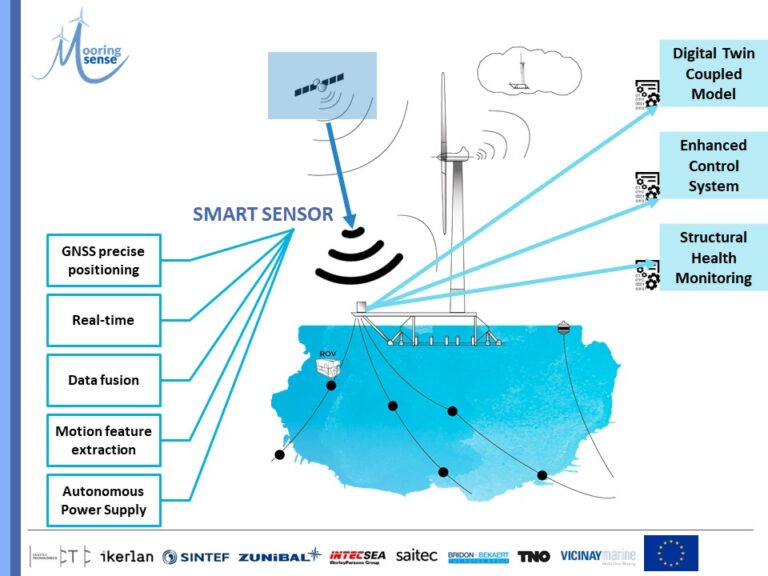
According to the definition of Technology readiness levels (TRL) into the Annex G of HORIZON 2020 – WORK PROGRAMME 2014-2015 we have reach a TRL 5 – technology validated in relevant environment (industrially relevant environment in the case of key enabling technologies) with the Smart Sensor ©.
According to the Deliverable D4.4 (‘Smart Sensor – Test and Validation Plan’) the Smart Sensor © has been validated at the buoy B4 of the relevant environment BIMEP[1].
[1] https://www.bimep.com/en/bimep-area/technical-characteristics
Addressing target audiences and expressing needs
- Grants and Subsidies
- Use of research Infrastructure
- Collaboration
Current TRL 5
So, in the horizon of next 3 years a reach-to-market must be achieved.
Next step TRL 6 – technology demonstrated in relevant environment (industrially relevant environment in the case of key enabling technologies).
Milestone: a similar test that carried at BIMEP buoy should be done considering a fixed and widely contrasted land-based reference point:
One of the challenging aspects to face in the next steps in the Smart Sensor © development is to design an effective test plan that demonstrate its performance in other real scenarios, like real FOWTs or even FOWTs farm.
- Public or private funding institutions
- Other Actors who can help us fulfil our market potential
- Research and Technology Organisations
R&D, Technology and Innovation aspects
According to the definition of Technology readiness levels (TRL) into the Annex G of HORIZON 2020 – WORK PROGRAMME 2014-2015 we have reach a TRL 5 – technology validated in relevant environment (industrially relevant environment in the case of key enabling technologies) with the Smart Sensor ©.
One of the challenging aspects to face in the next steps in the Smart Sensor © development is to design an effective test plan that demonstrate its performance in other real scenarios
There is a Plan to reach te market into the next 36 months, the plan has been included into the MooringSense Project Deliverables.
This technology is replicable in transport applieances.
Since it is a non-expensive and cost-effective technology, it can be easily issued into sustainable bussiness models
