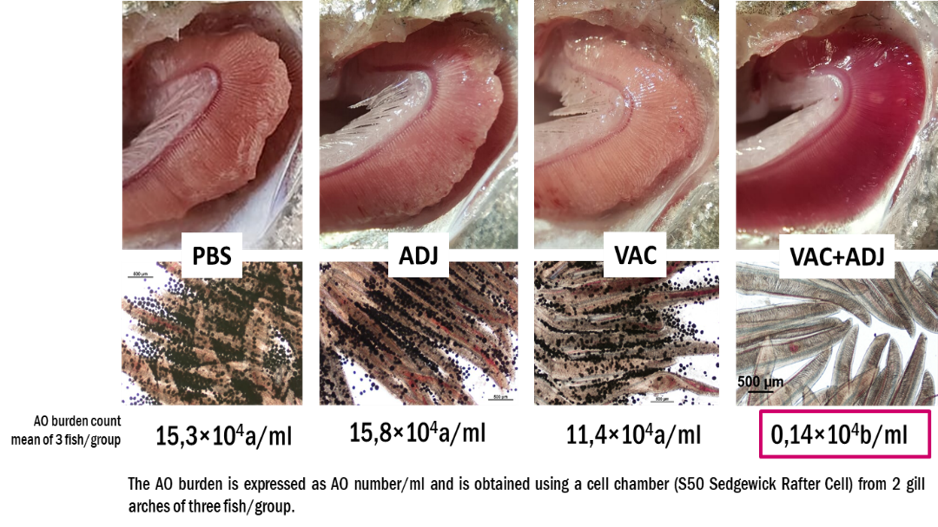
Amyloodiniosis, caused by the dinoflagellate Amyloodinium ocellatum (AO), can have severe impacts, such as 100% mortality, on fish health and welfare, with serious consequences for the aquaculture industry. The major impacts occur in the warmer months for fish species farmed in lagoon and land-based rearing sites such those employed for production of European sea bass (Dicentrarchus labrax). There are currently no effective prophylactic measures and to date no vaccines are available. The efficacy of a vaccine comprising crude inactivated dinospores, in order to provide a foundation for the development of a true vaccine has been evaluated. Intra-coelomic injection of vaccine combined with adjuvant, protected European Sea Bass 30 days post-vaccination, but failed in long-term protection (6 months post-vaccination). So, to possibly solve the problem, and to increase the specific immune response, a further trial with booster administration should be applied. The most upregulated genes and the major potential virulent proteins have been recorded in tomonts and dinospores. These outcomes could allow development of more targeted preventive measures.
Addressing target audiences and expressing needs
- Grants and Subsidies
- Collaboration
More funding and other partners in research institutions/universities to further trials with booster administration.
- Public or private funding institutions
- Research and Technology Organisations
- Academia/ Universities
R&D, Technology and Innovation aspects
A pilot study has been performed at a laboratory level. Based on the obtained preliminary results, we are currently improving the protocol design. Furthermore, to formulate a more targeted and protective vaccine, a de-novo transcriptome sequencing of Amyloodinium ocellatum tomonts and dinospores was performed.