Result description
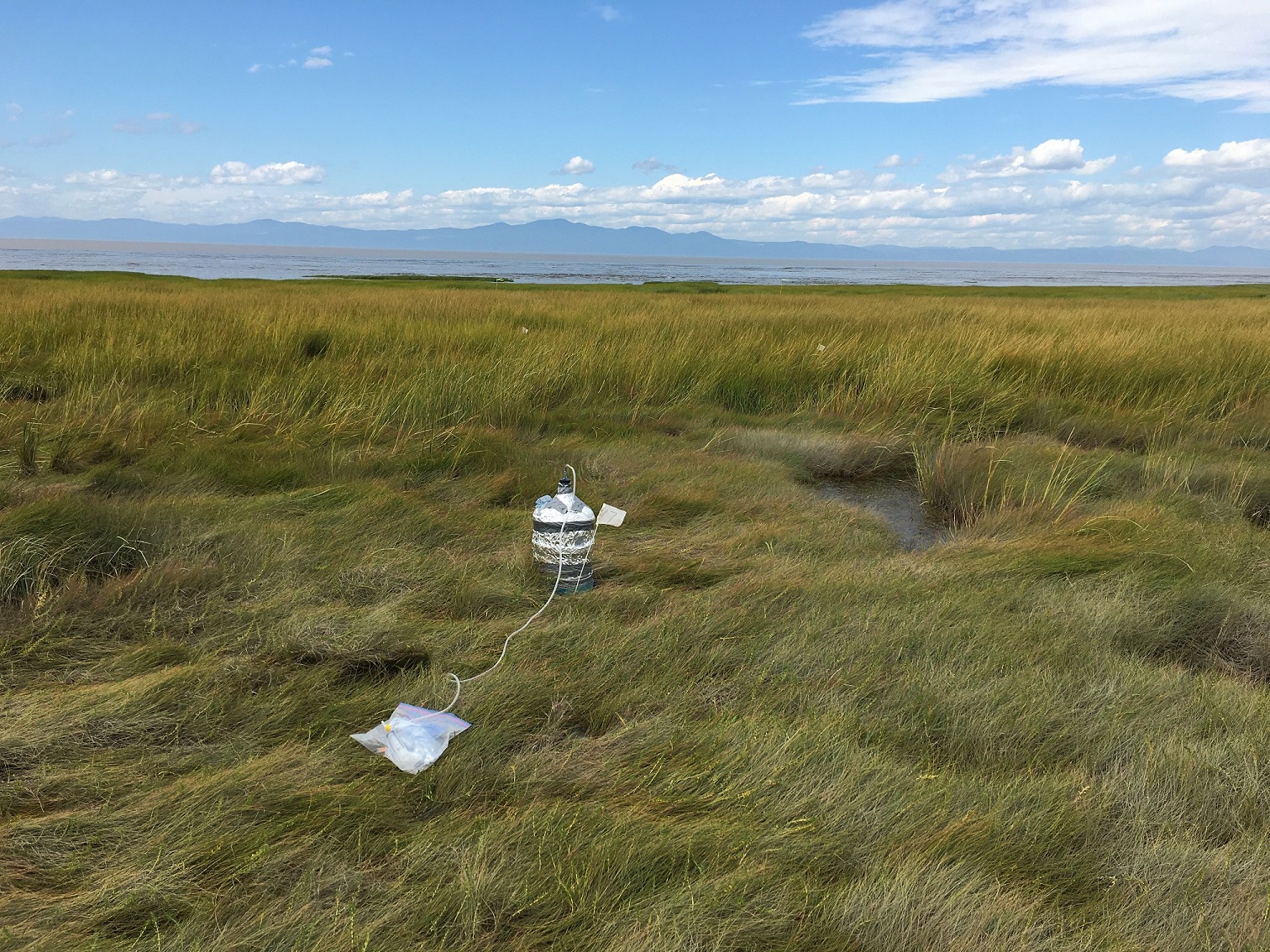
Methane fluxes were measured at six locations in four elevation zones of a northern salt marsh on the St. Lawrence River estuary at La Pocatière, Quebec (47°22’24.7″N 70°03’26.3″W). Additional environmental data was collected including carbon dioxide fluxes, extractable soil nitrate, extractable soil ammonium, extractable soil dissolved organic carbon, extractable soil total dissolved nitrogen, salinity, temperature, water table depth, soil total organic carbon, soil total nitrogen, soil organic carbon to nitrogen ratio and bulk density. Soil cores were collected from 0-15 cm and used for extractable nutrient analysis, bulk density and soil organic carbon and nitrogen analysis. The work was carried out with funding from the European Union’s Horizon 2020 Research and Innovation Programme under the Marie Sklodowska-Curie Grant Agreement 838296, a NSERC Discovery Grant and a Natural Environment Research Council grant number (NE/T012323/1). This dataset is used in a publication entitled Spartina alterniflora has the highest methane emissions in a St. Lawrence Estuary salt marsh in Environmental Research: Ecology.
 Adaptation to climate change
Addressing target audiences and expressing needs
- To raise awareness and possibly influence policy
- Grants and Subsidies
- Collaboration
Our results are useful for policy makers to consider emissions of methane when determining carbon value of salt marshes. These species-specific emissions may have implications for valuing the carbon stored in salt marshes for carbon trading, therefore, further funding to investigate more and collaboration with organisations working on policy and carbon accrediting would further this work and make use of the findings
- Public or private funding institutions
- EU and Member State Policy-makers
- Academia/ Universities
Result submitted to Horizon Results Platform by THE UNIVERSITY OF BIRMINGHAM