Result description
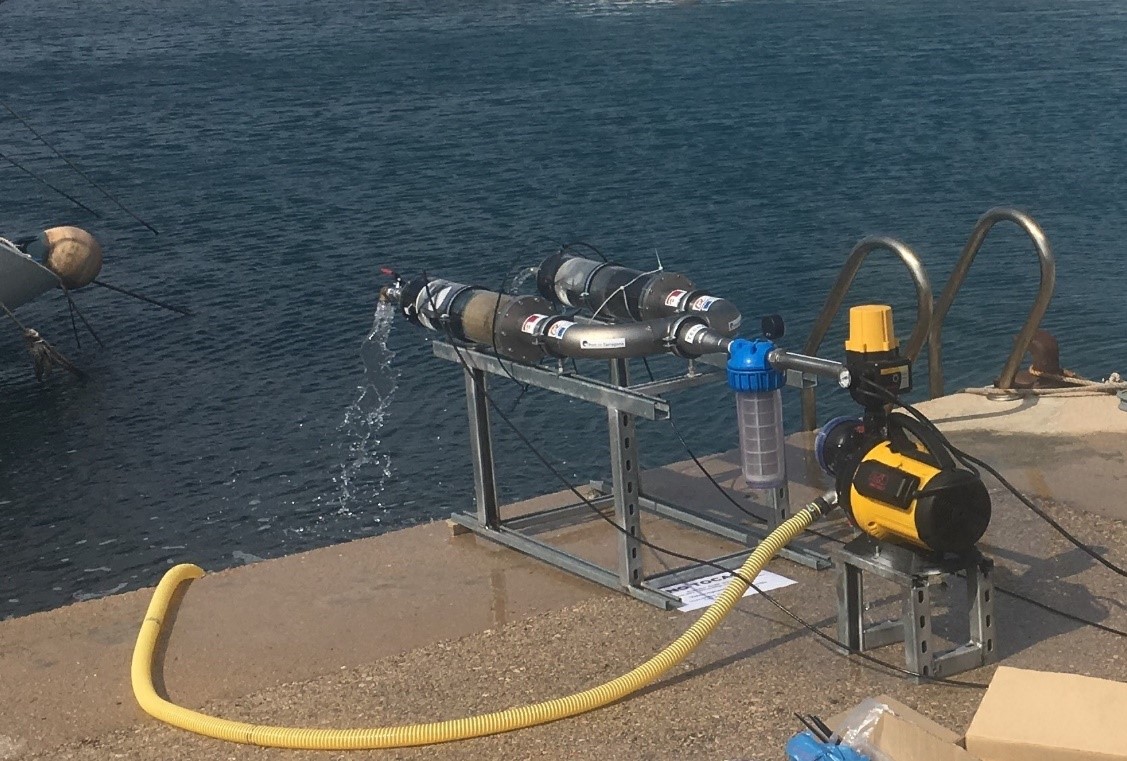
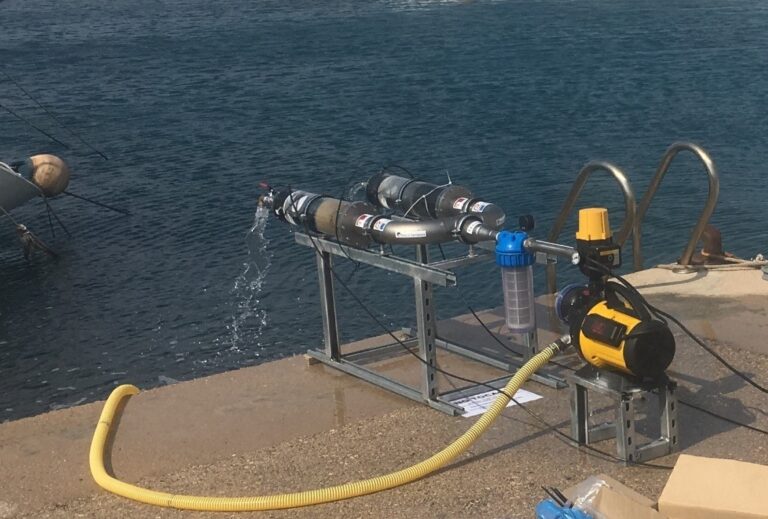
The invention is protected by a granted patent in Spain (ES2772251) and Luxemburg (LU500009). The application has been PCT extended (WO2021205051). Laboratory toxicity calibration tests have been carried out to validate the approach and understand the response of biofilms to toxic pressure (this has been done using 10 representative pesticides, 4 antibiotics and 5 heavy metals) (Carafa et al., 2021 ). The prototype was tested for a week in the tourist port of Tarragona. The sensors were tested in both external sunlight and controlled artificial actinic light. Additionally, the efficiency of different types of charcoal in removing toxic compounds has been proven in field trials. Data from the POCIS and DGT passive samplers confirm a different exposure to pollutants in the two chambers. The results of the laboratory and field calibrations have recently been presented at the Iberaqua-net Congress (http://congresoiberaquanet.activacongresos.com/programa/) and will be presented at SETAC EUROPE 2022 (https://europe2022.setac.org/).
Addressing target audiences and expressing needs
- To raise awareness and possibly influence policy
- Business partners – SMEs, Entrepreneurs, Large Corporations
- Collaboration
We are looking for a collaboration that leads to commercial exploitation of the presented invention. The ideal scenario for the company would be to reach an agreement in order to transfer the technology by a license (exclusive or non-exclusive) of the patented procedure, or a co-development. However, the form, terms, and conditions of the collaboration can be openly discussed if the presented technology is of interest. We are also interested in raise awareness in EU institution in order to improve the Water Framework Directive.
- EU and Member State Policy-makers
- Other Actors who can help us fulfil our market potential
- Research and Technology Organisations
R&D, Technology and Innovation aspects
Currently, a follow-up project has been awarded, for the development of the device in collaboration with the JRC-European Commission research centre and AECOM (https://aecom.com): the project obtained the maximum score among 101 projects presented and 24 accepted (Project WATERSCAN: WATER pollution warning System Combining bioAssays on passive sampling extracts and real time mixture toxicity detection. ACE026/21/000093. Funding from Acció and the European Union’s Horizon 2020 research and innovation program under Marie Skłodowska-Curie grant agreement No.801342 (Tecniospring INDUSTRY)
See below “Sustainability”.
Yes the results are replicable, the output data consist in measures of a monitoring PAM sensor, for more information about data replicability please refer to articles availables in: https://www.walz.com/products/chl_p700/monitoring-pam/publications.html
The Business model is essentially based on licensing the technology. The revenue will be royalties on sales and investments will be only Research and Development. Manufacturing and distribution are in charge of the licensee. The first three years will be used for further development. I considered the technology licensed and introduced in the marked of WWTP in EU and a low percentage of early adopters for the years 4 and 5. But in case it is enforced a new European law on mixture toxicity (that is in fact in preparation) the % of adopters, the values and the relative royalties could increase considerably with time.